
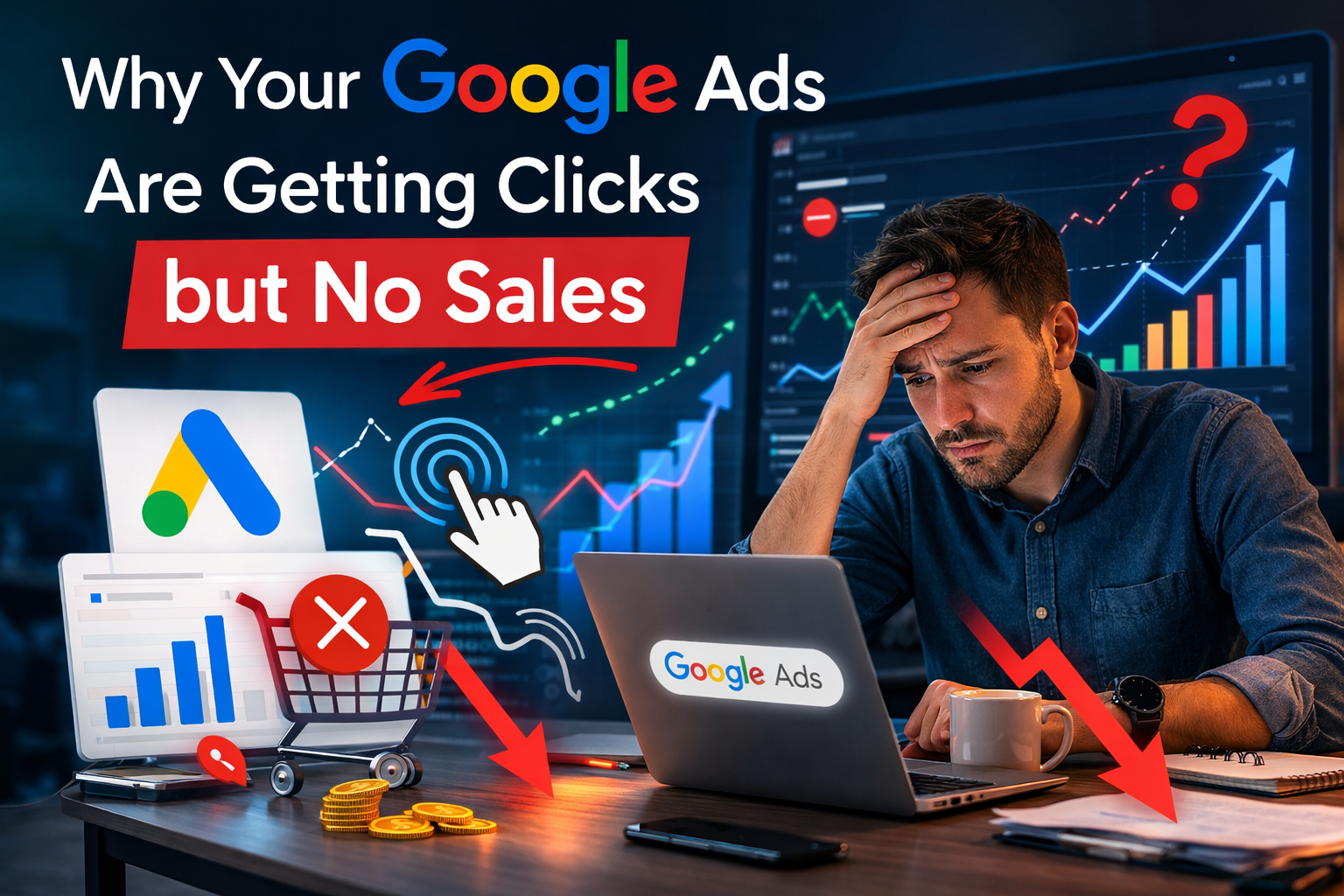
You launch a Google Ads campaign, the clicks start coming in, and the dashboard shows healthy traffic numbers. At first glance, it feels like progress. But after a few days or weeks, you notice something worrying: the sales simply are not happening.
This situation is more common than many businesses in the United Kingdom realise. According to Google’s own advertising benchmarks, many industries see click-through rates above 5%, yet conversion rates often remain below 3%. That means plenty of people are clicking but very few are actually buying.
If you are wondering why your Google Ads are getting clicks but no sales, the problem rarely lies in a single factor. Instead, it is usually a mix of targeting issues, landing page experience, and gaps in the overall conversion strategy. Understanding where the disconnect happens is the key to turning expensive clicks into profitable customers.
Understanding the Real Problem Behind Clicks Without Conversions
At its core, Google Ads is designed to attract attention. A compelling headline and well-targeted keyword can easily persuade someone to click. However, the moment that visitor lands on your website, the real test begins.
If the landing page does not match their expectations, loads slowly, or fails to clearly communicate value, most visitors will leave within seconds. This phenomenon is often called the “conversion gap.” It is the space between a user’s intent when they click and what they actually experience when they arrive.
Businesses across the UK frequently focus heavily on ad performance metrics like impressions and clicks, but they overlook the entire journey after the click. Effective PPC Management requires analysing every step of that journey, from the search query to the final purchase.
The Hidden Reasons Why Your Google Ads Are Getting Clicks but No Sales
Poor Keyword Intent
One of the most common reasons behind this issue is targeting the wrong type of keywords. Many advertisers choose high-volume keywords because they appear attractive on paper. However, these keywords often attract users who are still researching rather than ready to buy.
For example, someone searching for best running shoes might simply be comparing brands. On the other hand, a search for buy running shoes UK delivery signals a stronger purchasing intent.
When campaigns rely heavily on broad or informational keywords, clicks increase but conversions rarely follow. A well-structured keyword strategy prioritises transactional search terms and aligns them with clear buyer intent.
Mismatch Between Ad Copy and Landing Page
Imagine clicking on an ad that promises “50% off premium gym memberships” only to land on a generic homepage with no mention of that offer. Most users will immediately leave.
This disconnect between the advertisement and the landing page is one of the most overlooked causes of lost conversions. When your ad highlights a specific benefit or promotion, the landing page must reinforce that message instantly.
Consistency builds trust. When visitors see exactly what they expected after clicking the ad, they are far more likely to stay and take action.
Weak Landing Page Experience
Google’s research shows that over half of mobile users abandon a website if it takes longer than three seconds to load. Speed alone can dramatically impact conversion rates.
Beyond loading time, several other factors influence how visitors interact with your page. If the design feels outdated, the content is unclear, or the call-to-action is difficult to find, visitors may lose confidence quickly.
A high-converting landing page clearly answers three questions within seconds: what the product or service is, why it is valuable, and what the visitor should do next.
Many businesses in the UK invest heavily in ads but underestimate the role of SEO Services in improving site performance. A well-optimised website improves both organic visibility and paid campaign conversions.
Targeting the Wrong Audience
Another common issue arises when campaigns target audiences that are too broad. Google Ads offers powerful demographic, geographic, and behavioural targeting options, but these tools only work when used strategically.
For instance, a luxury home renovation company targeting the entire United Kingdom may attract many clicks from people who cannot realistically afford the service. The ads might perform well in terms of engagement, but the traffic will not convert.
Lack of Trust Signals
Online customers rarely make purchasing decisions instantly, especially if they are unfamiliar with the brand. If your website lacks clear trust signals, visitors may hesitate.
Trust signals include verified reviews, testimonials, secure payment indicators, professional design, and transparent contact information. Without these elements, even interested visitors may leave the site before completing a purchase.
In competitive markets across the UK, credibility can often determine whether a visitor converts or chooses a competitor.
How Better PPC Management Turns Clicks Into Customers
Successful advertising campaigns focus on the entire conversion journey rather than isolated metrics. Professional PPC Management involves continuously analysing performance data and adjusting strategies accordingly.
Experienced marketers review search term reports to identify irrelevant traffic, refine keyword targeting, and optimise ad messaging. They also test different landing page layouts, headlines, and calls-to-action to improve conversion rates over time.
The Role of SEO Services in Improving Google Ads Performance
Although many people view paid advertising and organic search as separate strategies, they are closely connected. Strong SEO Services enhance website structure, improve page speed, and create clear content that answers user queries.
These improvements benefit paid campaigns as well. When landing pages are optimised for both search engines and user experience, visitors are more likely to stay longer, engage with the content, and ultimately convert.
In other words, SEO strengthens the foundation that PPC campaigns rely on.
Real Example: When Clicks Don’t Equal Sales
Consider a UK-based home services company running Google Ads for “emergency plumbing.” The campaign generated hundreds of clicks each week, yet the number of enquiries remained surprisingly low.
After analysing the campaign, the issue became clear. The ads were appearing for informational searches such as “how to fix a leaking tap.” These users were looking for advice, not a professional plumber.
Once the keyword targeting shifted toward urgent phrases like “24 hour plumber near me” and the landing page highlighted immediate service availability, conversions increased significantly within weeks.
This example illustrates how subtle adjustments can dramatically change campaign performance.
Frequently Asked Questions
Why do Google Ads get clicks but not conversions?
Google Ads can attract clicks through compelling headlines and keywords, but conversions depend on the landing page experience, keyword intent, and audience targeting. If these elements do not align with user expectations, visitors may leave without purchasing.
How can I improve my Google Ads conversion rate?
Improving conversion rates involves refining keyword targeting, creating relevant landing pages, improving website speed, and ensuring strong calls-to-action. Professional PPC management often includes A/B testing and continuous optimisation.
Does SEO help Google Ads performance?
Yes. SEO improvements such as faster loading times, better content structure, and clearer user journeys enhance the effectiveness of Google Ads by providing a better landing page experience.
What is a good conversion rate for Google Ads?
Conversion rates vary by industry, but many businesses aim for between 3% and 6%. Higher rates are possible when campaigns are well-optimised and aligned with strong buyer intent.
Turning Your Google Ads Into Real Revenue
If you have been wondering why your Google Ads are getting clicks but no sales, the answer usually lies in the overall strategy rather than the ads themselves. Successful campaigns require careful keyword targeting, compelling landing pages, and continuous optimisation.
When PPC campaigns are supported by professional PPC Management and strong SEO Services, the entire customer journey becomes smoother. Visitors arrive with clear expectations, trust the website, and feel confident taking the next step.
If your business in the United Kingdom is investing in Google Ads but struggling to convert traffic into sales, it may be time to review the strategy behind your campaigns. With the right adjustments, those clicks can become something far more valuable: loyal customers.