
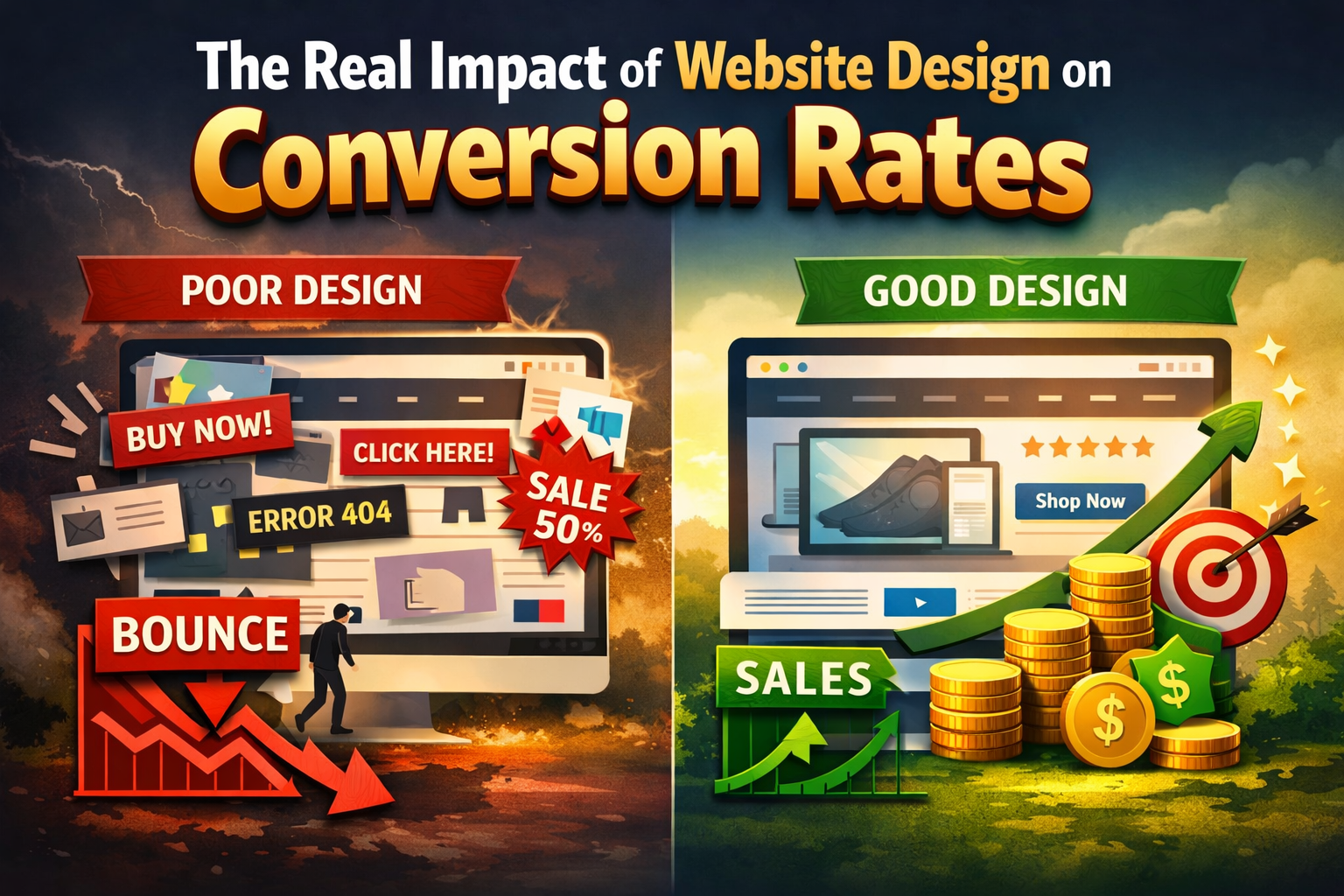
A business can spend thousands of pounds on advertising, search engine optimisation, and social media campaigns, yet still struggle to generate enquiries. Often the problem is not traffic. It is what happens after visitors land on the website.
Website design plays a critical role in how users interact with a brand online. A poorly structured website can drive visitors away within seconds, while a well-designed one can guide them naturally toward making an enquiry or purchase. In other words, design is not simply about aesthetics. It is about influencing user behaviour and improving conversion rates.
The real impact of website design becomes clear when businesses understand that every element of the site, from layout and speed to navigation and messaging affects whether a visitor becomes a customer.
Understanding Conversion Rates in the Digital Environment
Before exploring how design influences performance, it is important to understand what a conversion rate actually represents.
A conversion occurs when a visitor completes a desired action on your website. Depending on the business model, this action might include submitting a contact form, booking a consultation, requesting a quote, subscribing to a newsletter, or completing a purchase.
Conversion rate is calculated by dividing the number of conversions by the total number of website visitors. For example, if a website receives 1,000 visitors in a month and 30 of those visitors submit an enquiry form, the conversion rate would be three percent.
While that number may appear small, improving conversion rates even slightly can have a significant impact on business growth. If design improvements increase that rate from three percent to five percent, the business effectively generates 66 percent more enquiries from the same traffic.
The Psychology Behind First Impressions
Visitors make extremely fast judgments when they arrive on a website. According to research published by Google, users can form an opinion about a website in as little as 50 milliseconds. These initial perceptions influence whether they continue exploring or leave immediately.
Visual Credibility and Trust
The appearance of a website strongly influences how trustworthy a business appears. Research from Stanford University found that 75 percent of users judge a company’s credibility based on website design.
When visitors see a modern layout, professional typography, and high-quality images, they are more likely to believe the business behind the website is reliable. Conversely, outdated design elements can create doubt even if the company provides excellent services.
Professional Website Design Services focus heavily on these credibility signals because trust is often the first barrier to conversion.
Brand Perception and Professionalism
Design also communicates brand identity. Colours, layout structure, spacing, and typography subtly reinforce how professional and established a company appears.
For example, a well-designed website for a consultancy firm will typically use structured layouts, clear headings, and minimalist design to reflect professionalism and expertise. A poorly designed website with inconsistent colours or cluttered pages can unintentionally signal inexperience.
User Experience: The Foundation of Conversion-Focused Design
While visual design creates the first impression, user experience (UX) determines whether visitors remain on the site long enough to convert.
User experience refers to how easily visitors can interact with a website. If users can navigate the site effortlessly, understand the services offered, and locate important information quickly, they are far more likely to take action.
Navigation and Information Structure
Navigation acts as the roadmap of a website. When menus are organised logically, users can move through pages without confusion.
A poorly structured navigation system forces visitors to search for information, which increases frustration and abandonment rates. Clear page hierarchies and logical navigation menus ensure users always know where they are and where to go next.
Page Speed and Technical Performance
Website performance has become one of the most influential factors in conversion rates. Google reports that 53 percent of mobile users abandon a website if it takes longer than three seconds to load.
Slow websites not only reduce conversions but also negatively affect search rankings. Fast loading speeds improve user satisfaction and increase the likelihood that visitors will continue exploring the site.
Mobile Responsiveness
More than half of internet traffic in the United Kingdom now comes from mobile devices. A website that does not adapt properly to smaller screens risks losing a large portion of its audience.
Responsive design ensures the website layout automatically adjusts to smartphones and tablets. This improves readability, navigation, and form usability, all of which directly influence conversion behaviour.
Strategic Layouts and the Science of Attention
Website designers do not simply place elements randomly on a page. Effective layouts are based on behavioural research that reveals how users scan content.
Studies conducted by the Nielsen Norman Group show that users tend to scan web pages in an F-shaped pattern, focusing first on the top of the page and then moving downward along the left side.
Understanding these viewing patterns allows designers to strategically position critical elements such as calls to action, headlines, and trust signals.
Calls to Action and Visual Hierarchy
Calls to action are one of the most important elements influencing conversion rates. These prompts encourage visitors to take specific actions such as requesting a quote or contacting the business.
Designers use colour contrast, spacing, and size to make calls to action more visible. When placed within natural viewing zones, these elements can dramatically improve engagement.
The Role of White Space
White space, often overlooked by inexperienced designers, plays a critical role in readability and user focus.
By giving content room to breathe, white space reduces visual clutter and helps users focus on the most important information. This improves comprehension and encourages users to continue exploring the page.
Content, Design, and Conversion Strategy
Effective websites integrate design and content seamlessly. Design attracts attention and guides navigation, while content explains value and builds trust.
Messaging Clarity
Visitors should understand what a business offers within seconds of landing on the website. Clear headlines and concise descriptions help users quickly identify whether the service meets their needs.
Trust Signals and Social Proof
Trust signals reinforce credibility and reduce hesitation. These signals may include customer testimonials, case studies, industry certifications, or recognisable client logos.
By placing these elements strategically within the design, businesses can reassure visitors that they are making the right decision.
How Website Design Supports Wider Digital Marketing
A website rarely operates in isolation. It functions as the central hub connecting various digital marketing channels.
Businesses that invest in Social Media Manangement often drive significant traffic from platforms such as Instagram, Facebook, and LinkedIn. However, the effectiveness of these campaigns depends heavily on the website experience that follows.
If visitors arrive from social media campaigns but encounter slow loading speeds, confusing layouts, or unclear messaging, the momentum created by marketing efforts quickly disappears.
Real-World Evidence of Design Impact
The impact of design improvements can often be measured through conversion optimisation projects.
Consider a UK-based service company that redesigned its website after analysing user behaviour. The previous website suffered from slow loading times, complicated navigation, and poorly placed contact forms.
After implementing a new design focused on faster performance and clearer calls to action, the company observed a significant increase in enquiry submissions and a noticeable reduction in bounce rates.
Frequently Asked Questions
How does website design influence user behaviour?
Website design shapes how visitors interact with information. A well-organised layout makes it easier for users to understand services, navigate pages, and complete actions. When users feel comfortable and confident on a website, they are more likely to convert.
What are the most important design factors for improving conversion rates?
Several factors influence conversions, including page speed, mobile responsiveness, clear navigation, and visible calls to action. When these elements work together, they create a smooth experience that encourages visitors to take action.
Does website design affect search engine rankings?
Yes, design plays an important role in search performance. Factors such as page speed, mobile compatibility, and structured layouts are part of Google’s ranking criteria. A well-designed website improves both user experience and search visibility.
Can redesigning a website increase leads without increasing traffic?
In many cases, yes. Improving user experience and call-to-action placement can increase the percentage of visitors who convert, meaning businesses generate more leads from the same level of traffic.
Conclusion:
The real impact of website design goes far beyond visual appeal. Design influences trust, guides user behaviour, and determines whether marketing efforts translate into measurable results.
Businesses that treat website design as a strategic investment often experience improved engagement, stronger brand perception, and higher conversion rates. In competitive digital markets, a well-designed website can become one of the most valuable assets a company owns.
For organisations seeking sustainable growth, investing in professional Website Design Services and aligning the website with broader digital strategies such as Social Media Manangement can create a powerful foundation for long-term success.